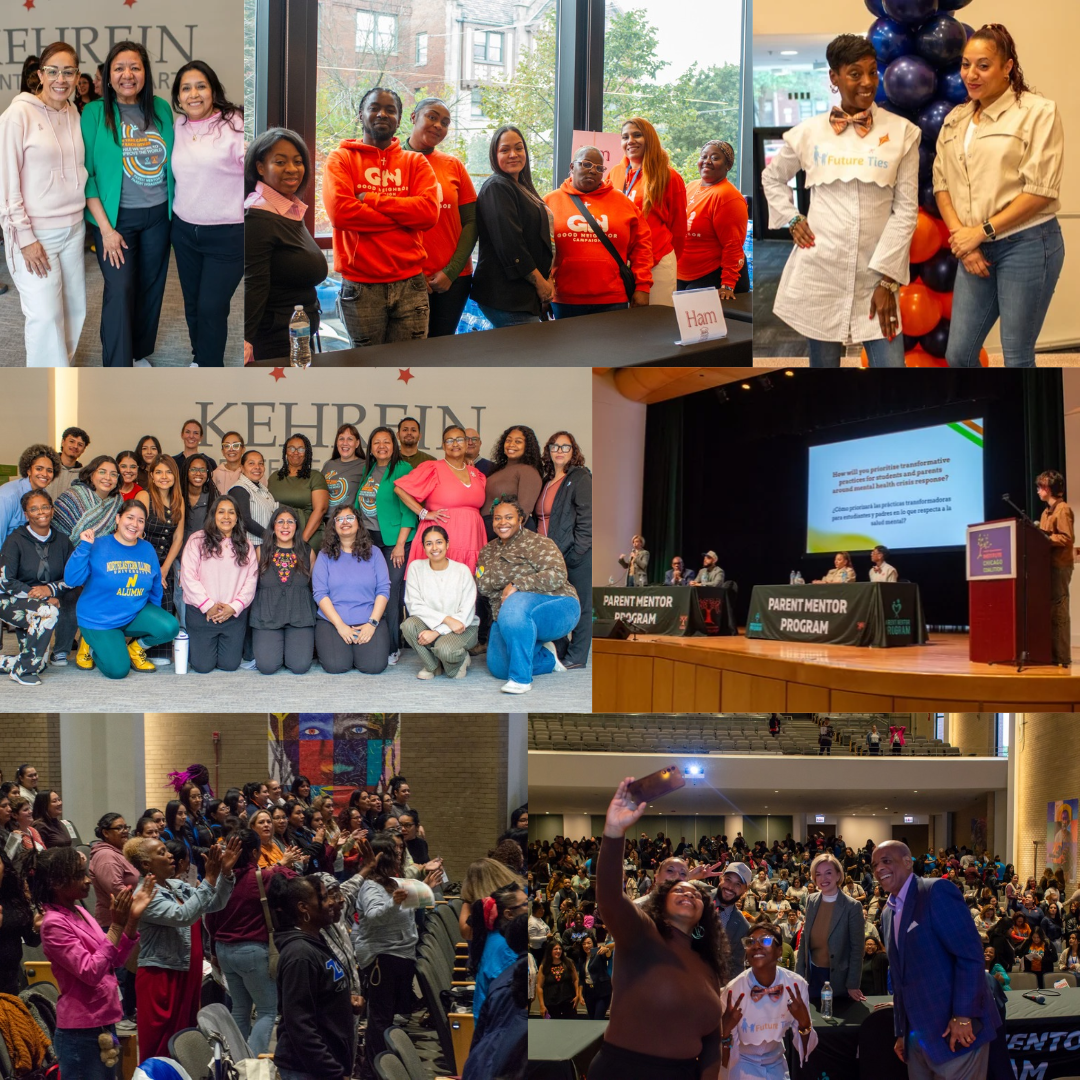
Equitable funding. Black student success. Including the community in planning for building, closing or improving our schools. Student mental health. Access to positions and retention for paraprofessionals.
These were some of the top questions parent leaders with our Parent Engagement Institute Chicago Coalition asked candidates for elected school board in October.
“It wasn't about just having the candidates there, it was about our parent leaders sharing their own personal stories, and questioning the decision makers ‘what are you going to do about what I just shared with you?’” said PEI Chicago Coalition organizer Bridgett White.
The PEI Chicago Coalition is made up of community organizations that recruit, coach and provide professional development to Parent Mentors in 163 Chicago Public Schools’ neighborhood elementary schools. That’s nearly 40% of the city’s 428 district-run elementary schools.
That means members have strong, informed opinions about what’s best for the future of our schools and the district as a whole. Questions at the candidate forums reflected that experience:
“My experience as a Parent Mentor at Farmer… has reinforced my belief that parents are important and can serve as positive role models,” District Outreach Initiatives’ Jake Hayward asked at our Southside Forum. “My question is about Black student success: what role do fathers play and what strategies would you suggest to strengthen their engagement and improve student outcomes?”
“In my middle school, the counselor-to-student ratio was 1 to 861… So here’s my question: How will you prioritize transformative practices for students and parents around mental health crisis response?” Brighton Park Neighborhood Council student leader Daniel Castillo said at our presidential candidate forum.
Also at the presidential forum, Kimberly Waterford, a Coordinator from Teamwork Englewood who has her own challenges within CPS when it comes to services for her diverse learner student, asked: “How will you ensure CPS staff members receive ongoing professional development and support so they can provide our students with disabilities with the support they need and deserve?”
Responding at the Southside forum were elected school board candidates for Subdistrict 9B Therese Boyle and Katherine S. Dunneback, Subdistrict 10A candidates Che "Rhymefest" Smith and Tameka Walton (write in) and Subdistrict 10B candidate Connie Anderson. All three presidential candidates— Jessica Biggs, Hilario Dominguez and Victor P. Henderson— responded to Castillo and Waterford.
Also at the candidate forums, attendees received palm cards to distribute in their school communities encouraging eligible voters to participate in the November 3 election (early voting has begun). Chicago Public Media staff provided voter guides in English and Spanish at the forums, which organizations took back to distribute, as well.
PEI Chicago Coalition leaders from more than 20 organizations participated in the nonpartisan events, which were supported by a grant from a private foundation. The questions reflected the PEICC pillars:
Full & Equitable Funding
Parent & Community Leadership
Authentic Partnership
Black Student Success
Disability Justice
Whole Child Curriculum
Meeting Mental & Physical Needs
Safety
Fully Staffed Classrooms
These pillars and the coalition itself initially formed two years ago with the partial election of the school board as a result of state legislation passed several years earlier. The PEI Chicago Coalition, which includes organizations that worked for the elected school board across 20 years, came together to ensure more accountability.
Pledge to meet with PEI Chicago Coalition if elected
With Chicago’s historic first election of all members of the school board, perhaps the most important question asked at the October forums was about next steps: what happens the day after the election and would candidates pledge to meet with PEI Chicago Coalition if elected: the response was 100% yes across the board. In other words, stay tuned for more advocacy to come.
“This is what needs to happen with all elections,” White said. “Not just going by ads on TV, what you get in the mail from them, but talking to candidates directly. We deserve a seat at the table.”
